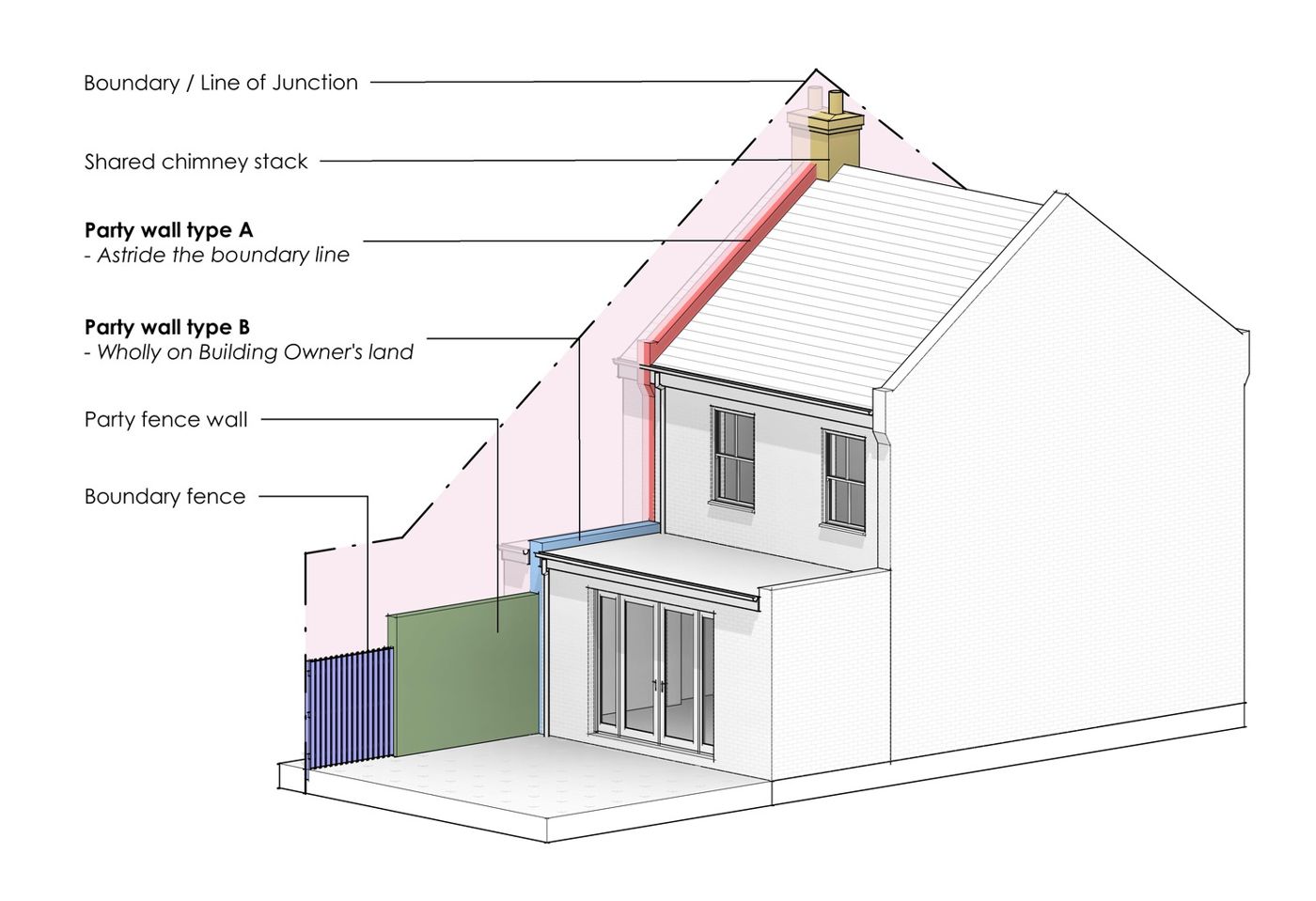
The Party Wall etc. Act 1996 applies in three situations: work to an existing party structure, new walls built up to or astride a boundary, and excavation close to a neighbouring building. Each has its own notice.
- Section 1 — a new wall at the boundary: at least 1 month’s notice
- Section 3 — work to an existing party wall or floor: at least 2 months’ notice
- Section 6 — excavation within 3 m or 6 m: at least 1 month’s notice, with a drawing
Section 1 — Line of Junction Notice
Used when you intend to build a wall astride or up to a boundary that is not already built on. You need your neighbour’s written consent to build astride the line; without it, the wall must be built wholly on your own land.
Section 3 — Party Structure Notice
Used for work to an existing party structure under section 2: cutting into a party wall to insert steel beams (common in loft conversions), removing chimney breasts, raising, thickening, underpinning or rebuilding the wall. Internal alterations that cut into a party wall usually need one.
Section 6 — Notice of Adjacent Excavation
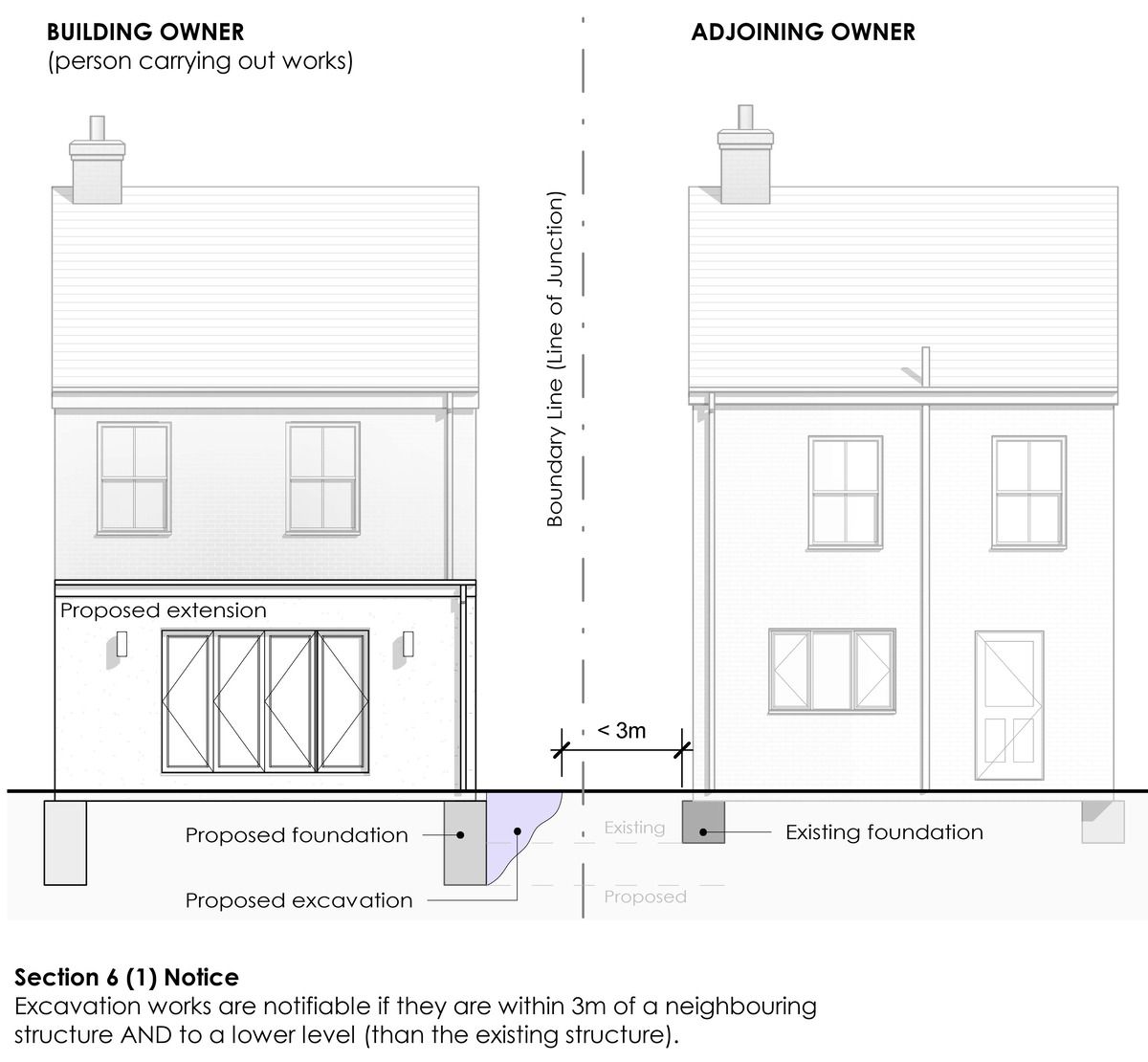
Most extensions need one because of the foundations. Section 6(1) applies to excavation within 3 metres of a neighbouring structure that goes below the level of its foundations. Section 6(2) applies within 6 metres where the excavation would cut a line drawn downwards at 45° from the bottom of the neighbour’s foundations. The notice must include a section drawing of the excavation, and sometimes specialist foundation details.
Who do you serve?
Every owner of the adjoining property: the freeholder and anyone holding a lease of more than 12 months. Notices describe the work, include plans where needed, and state the proposed start date.
What happens next
Your neighbour has 14 days to respond. If they consent in writing, work can start when the notice period ends. If they dissent or do not reply, a dispute arises under section 10 and surveyors are appointed to agree an award — either one “agreed surveyor” or one for each owner, who then select a third surveyor.
The owner carrying out the work is usually responsible for all reasonable surveyors’ fees.